Hey everyone, it’s Jake from the Coating Production Line team here. Lately, I’ve been getting so many calls from shop managers and plant engineers asking the same thing: “What the hell do I actually need for electrical power to run a coating line without shutting down mid-production?” Let’s be real—nothing kills a coating job faster than a random electrical glitch that fries your oven or stops your robot applicator cold. I’ve spent 12 years building and troubleshooting these lines, so I’m gonna break down the electrical requirements that actually matter, no fancy textbook jargon to waste your time. Coating Production Line
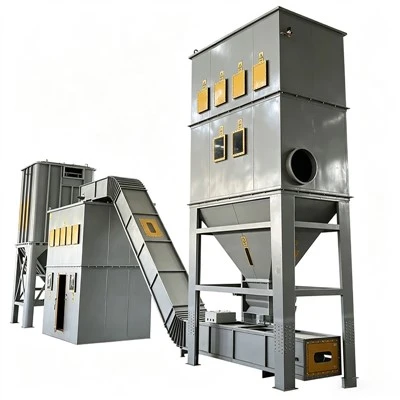
First off, let’s start with the biggest base requirement: voltage and amperage. You can’t just plug this into a standard wall outlet, duh. Most industrial coating lines need 3-phase power, not that single-phase crap for your home workshop. Single-phase might work for tiny, bench-top coating jobs, but anything with a conveyor, curing oven, robot spray guns, or powder feed system? 100% needs 3-phase. What voltage? 480V is the sweet spot for most medium-to-large lines in North America—It’s efficient enough to carry heavy loads without losing power, and most big industrial gear is built to handle that. If you’re in Europe or parts of Asia, 400V is standard, but that’s just regional; the key is that it’s 3-phase, and your line’s load total has to match your facility’s main service amperage. I’ve had a customer try to skimp here by tapping a sub-panel meant for a forklift, and they burned out their entire robot control board in 20 minutes. Don’t be that guy.
Next up is load calculation—this is make-or-break, people. You can’t just guess how much power your line will suck. Let’s list the big power hogs: a conveyor motor is around 5-10 HP, a curing oven can be 20-50 HP (or even more if it’s a large batch oven), powder spray guns might be smaller, but their control systems add up, and don’t forget the lighting, ventilation, and any filtration units. Add all that up, then slap a 25% safety buffer on top. Why? Because when you run a line at full tilt, everything draws a little extra power, and if you don’t have that buffer, you’ll get voltage drop—your oven won’t hit the right temp, your conveyor will slow down, and that’s when coating defects happen, or worse, your circuit breaker trips mid-run. I always tell customers: calculate your max load, then add 25% minimum. That’s not overkill; that’s how you avoid lost production time.
Power quality is another thing no one talks about until it’s too late. You might have the right voltage and amperage, but if your facility has dirty power—like surges when a crane turns on, or brownouts when another machine kicks in—your coating line’s electronics will take a beating. PLCs (the brain of your line), robot controls, and even spray gun regulators are super sensitive to voltage fluctuations. That’s why we always spec surge protectors for every control panel, and sometimes line conditioners if the facility’s power is really shaky. I once worked with a auto parts plant that had constant voltage spikes from their stamping press, and their powder coating lines had to replace 3 control boards a month until we added line conditioners. Fixed it in a week, no more headaches. Also, ground fault protection—super important for safety, especially around spray booths where there’s fine powder. You need dedicated ground fault circuit interrupters (GFCIs) for every electrical circuit in the booth, because a stray spark can be a disaster.
Let’s get into circuit design and distribution. Every major component on the line needs its own dedicated circuit, right? You don’t want your conveyor sharing power with your curing oven. If the oven kicks on and draws extra power, it’ll dim the conveyor’s motor or mess with its speed control, which would mess up the coating thickness. We design our lines with separate power panels for the conveyor, oven, spray booth, and control system. That way, if one circuit has an issue, the rest of the line can keep running, or you can troubleshoot without shutting everything down. Also, wire size matters—don’t skimp on wire gauge to save a buck. Smaller wire will overheat, cause voltage drop, and even start a fire. We use UL-listed, heavy-gauge copper wire for all our lines, and we size every wire based on the ampacity of the circuit it’s carrying. No exceptions.
Now, let’s talk about specific components’ electrical needs, because not every part of the line is the same. For example, the curing oven: if it’s an electric oven, it’s gonna be the biggest load by far—usually 20 to 100 kW, depending on length and temp. It needs a separate circuit, often with a contactor that can handle high amp draws, and temperature control that’s tied to the line’s PLC. Then there’s the spray system: powder spray guns are low-voltage (24V DC for controls, usually), but the fluidization hopper and feed pumps need 120V or 240V AC. The conveyor motors: variable frequency drives (VFDs) are standard on our lines, which let you adjust conveyor speed based on your coating process, but VFDs need their own dedicated circuits too, and they can cause a little electrical noise, so we filter them to keep that from messing with other electronics. The PLC and touchscreen control panel run on 24V DC, which is low-voltage and safer, but it still needs a steady power supply, so we use uninterruptible power supplies (UPS) for the control system. That way, if there’s a 2-second power blip, the line doesn’t crash, and you don’t lose all your settings mid-job.
Safety isn’t just a side note here—it’s part of the electrical requirements too. OSHA (or whatever your local safety agency is) has rules for industrial electrical systems in coating areas, and we build all our lines to meet those. That means locked disconnect switches for every major component, so only authorized people can work on the power, emergency stop (E-stop) buttons that cut power to the entire line in 0.1 seconds, and proper labeling of all circuits so no one gets confused when troubleshooting. Also, in powder coating booths, you have to have electrical components rated for hazardous locations, because of the flammable powder dust. We use Class II, Division 2 rated components for all booth circuits, which are designed to prevent sparks from igniting dust. Skip that, and you’re asking for a fire or explosion.
Wait, I know what some of you are thinking: “Can’t I just use a generator if my facility has bad power?” Yeah, but you have to size the generator correctly. It needs to handle the full load of the line, plus that 25% buffer I mentioned earlier, and you have to make sure the generator is a 3-phase unit too. If you’re running a critical line that can’t shut down (like automotive parts or medical devices), a UPS + generator backup is a good call, but you’ve got to match the electrical specs. I’ve seen generators that were too small, and they couldn’t run the oven and conveyor at the same time—total waste of money.
Let me wrap this up with a quick checklist, because no one wants to read a wall of text without something actionable. First: confirm your facility has 3-phase power (480V NA, 400V EU/global). Second: calculate your total line load, add 25% for buffer, make sure your main service can handle it. Third: power quality—check for surges/brownouts, spec surge protectors and line conditioners if needed. Fourth: dedicated circuits for every major component, proper wire size. Fifth: safety—GFCIs, E-stops, hazardous location rated parts for booths, locked disconnects. Sixth: control system UPS to prevent crashes from power blips.
At the end of the day, the last thing you want is a new coating line that’s down for days because you skipped a key electrical requirement. I’ve built lines that run 24/7 for years without a single electrical issue, and it all comes down to getting these specs right from the start. If you’re in the market for a new coating line, or you’re looking to upgrade an existing one, and you’re confused about electrical needs—hit us up to chat. We don’t do one-size-fits-all; we’ll walk through your facility, your production needs, and make sure the electrical system is built to handle it, no guesswork. You focus on coating parts, we’ll handle the power so it just works.
Grinding Table References:
- Occupational Safety and Health Administration (OSHA). Electrical Safety-Related Work Practices. 29 CFR 1910.331–1910.335.
- National Electrical Manufacturers Association (NEMA). Standards for Industrial Control and Automation Equipment.
- Powder Coating Manufacturers Association (PCMA). Electrical Safety Guidelines for Powder Coating Operations.
- Underwriters Laboratories (UL). Standard for Electrical Safety in Industrial Machinery (UL 61010-1).
Ningbo Jialong Energy-saving and Environmental Protection Technology Co., Ltd.
As one of the most professional coating production line manufacturers and suppliers in China, we also support customized service. We warmly welcome to buy advanced coating production line in stock here from our factory. If you have any enquiry about quotation, please feel free to email us.
Address: Dong Village, Dongwu Town, Yinzhou District, Ningbo City, Zhejiang Province (No.63 Zhennan Road, Dongwu Town)
E-mail: Lin.cx@nb-jalo.com
WebSite: https://www.cnjialong.com/
