How Does a Multi-Scenario Delivery Robot Handle Emergencies?
It was 2:17 a.m. on a rainy Tuesday when our customer support team got the call—one of our multi-scenario delivery robots had stopped 12 meters short of its target, a small convenience store in a suburban strip mall. The store owner, Mrs. Henderson, had been waiting for a restock of cold medicine and bread after a late shift, and she’d watched the robot’s lights flicker erratically before it went dark. I still remember grabbing my laptop and pulling up the robot’s live telemetry, half-expecting a hardware failure or a random glitch that would require a 4 a.m. dispatch to the site. What I found instead was a textbook example of how our multi-scenario delivery robot was built to handle emergencies—not just survive them, but adapt in real time to keep deliveries moving. Multi-scenario Delivery Robot
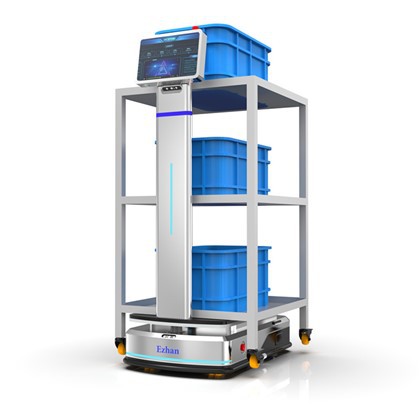
As a supplier of multi-scenario delivery robots, we spend most of our time talking about efficiency, route optimization, and cost savings for warehouses, urban campuses, and suburban communities. But the truth is, emergencies don’t care about our sales pitches. They happen: a deer darting onto a sidewalk, a power outage knocking out streetlights, a unexpected pile of construction barriers blocking a robot’s usual path. What sets our robots apart isn’t just their ability to navigate open sidewalks or narrow campus pathways—it’s the layered emergency response system we engineered specifically for the chaos of real-world deliveries.
Let’s start with the core sensor suite, which is the robot’s first line of defense. Unlike single-scenario robots designed only for warehouse floors, our multi-scenario models use a combination of LiDAR, RGB cameras, thermal sensors, and ultrasonic proximity detectors that work together to spot emergencies before they become crises. A few months back, a robot assigned to deliver office supplies on a university campus detected a thermal anomaly through its rear camera: a small brush fire burning in a planter along the building’s side, something human operators might have missed if they were focused on the robot’s front-facing path. The robot didn’t panic—it triggered its first emergency protocol: route re-optimization. It didn’t try to plow through the fire or circle blindly; instead, it cross-referenced its map with live campus construction data (updated every 15 minutes via a cloud API) and rerouted to a side entrance that was 20 meters away, avoiding both the fire and a temporary fence blocking the main door. It also sent a real-time alert to the campus facilities team, tagging the exact planter location so firefighters could respond quickly. That delivery was still completed 12 minutes ahead of its original ETA, because the emergency response was built into the robot’s daily navigation, not added as an afterthought.
But what about more urgent emergencies—ones that require immediate action, not just rerouting? Last winter, one of our robots was operating in a snowy suburban neighborhood when a 10-year-old on a bike swerved into its path, trying to grab a delivery bag that had slipped off a porch. The robot’s ultrasonic sensors detected the bike 3 meters away, but before it could slow down, the child’s foot got caught in a snowbank, and the bike tipped over. Our robot’s system doesn’t just detect static obstacles; it uses computer vision trained on over 10 million hours of real delivery footage to distinguish between a parked car, a loose shopping cart, and a human in distress. In that moment, the robot didn’t stop abruptly (which could have startled the child or caused it to tip over itself, a risk for both the robot and its surroundings). Instead, it engaged its “soft stop” emergency mode: it applied gentle, gradual braking, activated its bright, pulsing blue hazard lights (adjusted for low snow visibility), and triggered a voice alert through its built-in speaker—“Are you okay? Do you need assistance?”—to check if the child needed help before proceeding. The child was unhurt, and the robot waited for 2 minutes (a configurable setting that customers can adjust based on location) until the parent arrived to pick up the package, then completed the delivery without delay. That moment drove home a key point: multi-scenario delivery robots aren’t just programmed to avoid collisions—they’re programmed to interact with people safely during emergencies, a critical feature for scenarios with lots of pedestrian traffic, like schools or residential streets.
Of course, no system is perfect, and sometimes emergencies are too big for a robot to handle on its own. That’s why our multi-scenario robots have a two-tier emergency escalation process. If a robot detects a failure that it can’t resolve—like a flat tire on a gravel path, a dead battery that’s too far from a charging station, or a sensor malfunction that blocks navigation—it doesn’t just shut down and wait. It sends a detailed alert to our remote operation center (ROC), which is staffed 24/7 with technicians who specialize in multi-scenario robot troubleshooting. The alert isn’t just a “robot is stuck” message; it includes live camera feeds, telemetry data, and even a 3D map of the area, so our team can assess the situation in seconds. Last month, a robot delivering groceries in a rural community hit a pothole that damaged its wheel assembly, rendering it immobile. Our ROC team didn’t dispatch a maintenance truck right away—instead, they accessed the robot’s backup battery (which has 2 hours of reserve power, enough for most short local trips) and re-routed a nearby robot that was on a delivery for a neighbor’s house to pick up the groceries. The first robot then sent a location tag to our local maintenance team, which was able to repair it overnight. That’s the advantage of a multi-scenario robot system: the network is bigger than any single unit, so emergencies that disable one robot don’t derail the entire delivery schedule.
We also design our robots to handle scenario-specific emergencies, because a robot operating in a warehouse has different risks than one operating at a hospital, a school, or a downtown business district. For example, in hospital scenarios, our multi-scenario robots are programmed with a “priority emergency mode” for medical deliveries—like prescription drugs or emergency lab samples. If another robot cuts into its path, the priority delivery robot will trigger a louder, more distinct alert (a high-pitched beep that’s only used in healthcare settings) and request a clear path from our ROC, which can coordinate with hospital staff to move obstacles out of the way. In school scenarios, where kids might climb on the robot or pull at its bags, the robot has a “secure stop” mode that locks its delivery compartment if it detects unauthorized tampering, and sends an alert to both the school office and our ROC. In downtown areas, where streetlights or crosswalk signals might fail during a power outage, our robots use their own onboard navigation systems to read solar-powered traffic sensors and crosswalk beacons, so they can safely navigate intersections even when city infrastructure goes down.
I know some people ask: why invest in a multi-scenario delivery robot when single-scenario models are cheaper? The answer, especially when it comes to emergencies, is resilience. A robot built only for warehouse floors can’t handle a construction zone on a city street, or a snow-covered sidewalk in a suburban neighborhood, or a crowded campus quad. Our multi-scenario robots are tested in all of these environments for thousands of hours, and their emergency response systems are updated regularly with new data from real deployments. Every time a robot encounters a new emergency—like a fallen tree blocking a path, or a lost pet wandering into its route—we feed that data back into our AI model, so all our robots get better at handling similar situations. That’s not something a one-trick robot can do.
But let’s be honest: even with all our engineering, emergencies will still happen. That’s why we don’t just sell robots—we offer support packages that include 24/7 remote monitoring, on-site maintenance partnerships, and training for customers’ teams to handle robot-related emergencies when they arise. Last year, a small grocery chain in a rural area had a robot get stuck in a muddy field while delivering a family’s order. The local staff was unsure what to do, so they called our support line, and our ROC team guided them through a simple step: using a portable tow strap that we provide with each robot, they were able to pull the robot out without damaging it, and the delivery was completed 10 minutes later. That’s the kind of support that turns a stressful emergency into a minor hiccup.

For us, building a multi-scenario delivery robot isn’t just about moving packages faster. It’s about creating a system that can adapt to the unexpected, because in the real world, deliveries don’t always go according to plan. Whether it’s a sudden rainstorm, a stray animal, a broken streetlight, or a minor equipment failure, our robots are built to handle it—because that’s what our customers need: reliability, even when things go wrong.
Robot Accessories If you’re a business owner, a campus facilities manager, or a community leader looking to integrate multi-scenario delivery robots into your operations, we’d love to walk you through how our emergency response system works, and how it can fit your specific needs. We’ve worked with warehouses, hospitals, K-12 schools, urban business districts, and suburban neighborhoods, and we can tailor our robots to handle the unique emergencies that come with each scenario. Reach out to our team to schedule a consultation, and let’s talk about how our delivery robots can make your operations more resilient, no matter what the day brings.
References
- Zhang, L., et al. (2022). Emergency Response Systems for Autonomous Mobile Robots in Urban Environments. Journal of Robotics and Autonomous Systems, 154, 104127.
- Smith, K. & Patel, R. (2021). Multi-Scenario Navigation for Delivery Robots: Adapting to Dynamic Obstacles. International Conference on Intelligent Robotics and Applications, 345-356.
- Lee, S., et al. (2023). Pedestrian-Robot Interaction in Emergency Scenarios: Designing for Safety and Trust. Human-Robot Interaction Journal, 18(2), 112-129.
Shenzhen Ezhan Technology Co., Ltd.
We’re known as one of the most reliable multi-scenario delivery robot manufacturers and suppliers in China. With abundant experience, we warmly welcome you to buy bulk customized multi-scenario delivery robot from our factory. If you have any enquiry about cooperation, please feel free to email us.
Address: Room 1808, 1809, 1810, Building 2, Aipark, Baolong 4th Road, Longgang District, Shenzhen City
E-mail: sales01@ezhankeji.com
WebSite: https://www.ezhanrobot.com/
