Hey there! I’m a supplier of stainless steel railings, and I often get asked about how to choose the right diameter for stainless steel railing pipes. It’s a crucial decision because the diameter affects not only the aesthetics but also the functionality and safety of your railings. So, let’s dive right in and explore the factors you need to consider when making this choice. Stainless Steel Railing
Understand Your Railing’s Purpose
First things first, you’ve gotta think about what your railing is going to be used for. Is it for a residential balcony, a commercial staircase, or a public walkway? Different applications have different requirements.
For residential use, say on a balcony or a deck, you typically have more flexibility. A smaller diameter pipe, like 1 1/4 inches (about 32 mm), can work well. It gives a sleek and modern look without overpowering the space. You might not have a huge load of people on your balcony at once, so the smaller diameter is usually enough to provide the necessary support.
On the other hand, if you’re dealing with a commercial or public area, such as a hotel staircase or a shopping mall walkway, you’ll need a larger diameter pipe. Here, safety and durability are top priorities. A 1 3/4 inches (around 44 mm) or even 2 inches (about 51 mm) diameter pipe is a better choice. These larger pipes can handle more stress and are less likely to bend or break under heavy use.
Consider Local Building Codes
Don’t forget about the local building codes! These are the rules and regulations set by your local government to ensure the safety of buildings and their occupants. They often specify the minimum diameter for stainless steel railing pipes based on the type of building and its use.
For example, in some areas, if you’re building a railing for a multi – story building, the codes might require a larger diameter pipe to prevent any potential failures. Ignoring these codes can lead to serious problems, like having to redo your railing after it’s inspected. So, before you even start thinking about the design, check with your local building department. They can give you the exact requirements for your project.
Look at the Design and Aesthetics
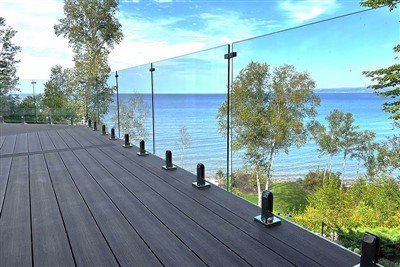
The look you’re going for matters a lot. If you’re aiming for a modern, minimalist look, smaller diameter pipes are your friend. They create a lighter, airier feel and can give your railing a more delicate appearance. You can use them in combination with other materials like glass or wood to add some contrast.
If you prefer a more traditional or heavy – duty look, larger diameter pipes are the way to go. They give a sense of strength and stability, and they can stand up well in a more traditional architectural setting. You might see larger pipes used in Victorian – style homes or in industrial – looking buildings to enhance the overall aesthetic.
Think About the Spacing and Structural Support
The spacing between the railing pipes also plays a role in determining the right diameter. If you’re planning to have wider spacing between the pipes, you’ll need a larger diameter to ensure the railing is strong enough. A wider gap means there’s more stress on each individual pipe, so a larger diameter can handle that stress better.
On the flip side, if you’re going to have the pipes closely spaced, a smaller diameter might be sufficient. The closely spaced pipes work together to support the railing, reducing the load on each individual pipe.
Also, consider the structural support of the railing as a whole. If the railing is well – supported at regular intervals, you might be able to get away with a slightly smaller diameter pipe. But if the support is limited, you’ll need a larger diameter to keep the railing stable.
Evaluate the Cost
Cost is always a factor. Generally, larger diameter pipes are more expensive than smaller ones. This is because they require more raw material and are often more difficult to manufacture and transport. If you’re on a tight budget, you might want to explore using a smaller diameter pipe, especially if it meets your other requirements.
However, don’t just focus on the upfront cost. A slightly more expensive but larger – diameter pipe might save you money in the long run. It could last longer, require less maintenance, and provide better safety, which could save you from potential legal issues or costly repairs down the road.
Check the Availability
You’ve also got to consider the availability of the pipe diameter you want. Sometimes, a particular diameter might be harder to find, especially if it’s an unusual size. This can cause delays in your project and might even force you to change your plans.
As a supplier, I can tell you that common diameters like 1 1/4 inches and 1 3/4 inches are usually easier to stock and source. If you need a more specialized diameter, it’s a good idea to check with your supplier well in advance to make sure they can get it for you in a timely manner.
Test and Consult
Before you make a final decision, it’s a good idea to do some testing if you can. You can set up a small mock – up of your railing with different diameter pipes and see how they feel and look. This hands – on approach can give you a better sense of what works best for your project.
And don’t hesitate to consult with professionals. Architects, engineers, and experienced contractors can offer valuable insights based on their knowledge and experience. They’ve worked on similar projects and can help you avoid common mistakes.
Conclusion and Call to Action

Choosing the right diameter for stainless steel railing pipes is a multi – faceted decision. You need to balance the purpose, local codes, design, spacing, cost, and availability to make the best choice for your project.
Stainless Steel Railing If you’re still unsure or need more information, I’m here to help. As a stainless steel railing supplier, I’ve got the expertise and the products to meet your needs. Whether you’re a homeowner, a contractor, or a business owner, I can provide you with high – quality stainless steel railing pipes in different diameters. Just reach out to me, and we can have a chat about your project. Let’s work together to create the perfect railing for your space.
References
- "Building Codes Illustrated" by Francis D.K. Ching and Steven Winkel
- "Stainless Steel Handbook" by ASM International
ZP Aluminum Co., Ltd.
ZP Aluminum Co., Ltd. is one of the most professional stainless steel railing manufacturers and suppliers in China. With abundant experience, we warmly welcome you to wholesale customized stainless steel railing made in China here from our factory. If you have any enquiry about quotation, please feel free to email us.
Address: LEPING INDUSTRIAL ZONE, SANSHUI DISTRICT, FOSHAN, GUANGDONG, CHINA
E-mail: general@zp-aluminum.com
WebSite: https://www.zp-railing.com/
