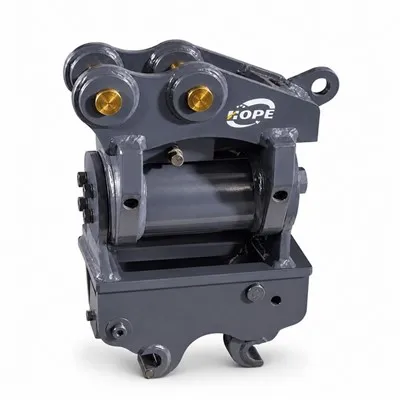
Compaction quality standards are crucial in construction projects, especially when using modern equipment like hydraulic compactors. As a supplier of hydraulic compactors, I’ve had the privilege of witnessing firsthand the impact these machines have on construction sites, and I understand the importance of clear quality standards. In this blog, I’ll delve into the compaction quality standard for a hydraulic compactor, exploring its significance, key indicators, measurement methods, and the role our hydraulic compactors play in meeting these standards. Hydraulic Compactor
Significance of Compaction Quality Standards
Compaction is the process of increasing the density of soil or other materials by reducing the voids between particles. This is essential for several reasons. Firstly, proper compaction improves the load – bearing capacity of the soil. In construction projects such as building foundations, roads, and dams, a well – compacted base can prevent differential settlement, which can lead to cracks in structures and uneven surfaces on roads.
Secondly, compaction reduces the permeability of soil. By minimizing the voids, water infiltration is decreased, which helps to protect the structure from water – related damage such as erosion and frost heave.
In addition, meeting compaction quality standards ensures the long – term stability and durability of the construction. This not only enhances the safety of the project but also reduces maintenance costs over time.
Key Indicators of Compaction Quality
Dry Density
Dry density is one of the most important indicators of compaction quality. It represents the mass of solid particles per unit volume of the compacted material. The maximum dry density of a soil or fill material can be determined through laboratory tests, such as the Proctor compaction test. The actual dry density achieved on – site should be close to or meet the specified maximum dry density. For a hydraulic compactor, the ability to achieve the desired dry density depends on factors such as the compactor’s impact energy, the number of passes, and the thickness of the lifts being compacted.
Degree of Compaction
The degree of compaction is the ratio of the actual dry density of the compacted material to the maximum dry density obtained from laboratory tests, expressed as a percentage. Most construction specifications require a degree of compaction of 90% – 98% for different types of projects. For example, for highway sub – bases, a degree of compaction of 95% – 98% is often specified to ensure sufficient strength and stability.
Moisture Content
Moisture content plays a vital role in the compaction process. There is an optimum moisture content for each soil type at which the maximum dry density can be achieved. If the moisture content is too low, the soil particles will not slide easily over each other, and the compaction will be ineffective. On the other hand, if the moisture content is too high, the soil will become saturated, and the compaction effort may cause the soil to become soft and unstable. A hydraulic compactor needs to be used in conjunction with appropriate moisture control measures to achieve the best compaction results.
Settlement
Settlement is another important indicator. After compaction, the amount of settlement should be within an acceptable range. Excessive settlement may indicate that the compaction is not sufficient. Settlement can be measured over time, and continuous monitoring can ensure that the compaction quality remains stable in the long run.
Measurement Methods of Compaction Quality
Nuclear Density Gauge
A nuclear density gauge is a commonly used tool for measuring the density and moisture content of compacted materials. It uses radioactive sources to determine the density of the soil by measuring the amount of radiation scattered or absorbed by the material. This method is relatively quick and can provide in – situ measurements, but it requires trained operators and strict safety precautions due to the use of radioactive materials.
Sand Cone Method
The sand cone method involves filling a hole in the compacted material with a known – density sand. By measuring the volume of the hole and the mass of the excavated material, the dry density can be calculated. This method is simple and does not require expensive equipment, but it is time – consuming and disruptive to the compacted surface.
Plate Load Test
The plate load test measures the settlement of a rigid plate under a specified load. It provides information about the load – bearing capacity of the compacted material. By comparing the measured settlement with the design requirements, the compaction quality can be evaluated. However, this test is relatively complex and time – consuming, and it is usually used for large – scale projects or in critical areas.
The Role of Our Hydraulic Compactors in Meeting Compaction Standards
Our hydraulic compactors are designed to deliver high – impact energy, which is essential for achieving the desired compaction density. With adjustable impact energy and frequency settings, our machines can be adapted to different soil types and construction requirements.
For projects with tight space constraints or complex geometries, our hydraulic compactors offer excellent maneuverability. They can be easily attached to excavators, allowing for efficient compaction in areas where traditional compactors cannot reach.
In terms of improving the degree of compaction, our hydraulic compactors can perform multiple passes with consistent impact, ensuring that the entire area is uniformly compacted. This helps to minimize the settlement and improve the overall stability of the construction.
Moreover, our technical support team is always ready to provide on – site guidance on the proper use of the hydraulic compactors. They can help contractors adjust the compaction parameters according to the specific soil conditions and project requirements, ensuring that the compaction quality standards are met.
Conclusion
Understanding the compaction quality standard for a hydraulic compactor is essential for successful construction projects. By focusing on key indicators such as dry density, degree of compaction, moisture content, and settlement, and using appropriate measurement methods, contractors can ensure that the compaction work meets the required standards.
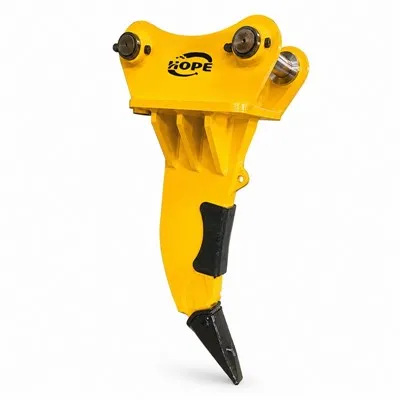
Grapple Our hydraulic compactors, with their advanced design and performance, are well – equipped to help construction teams achieve high – quality compaction. If you are involved in a construction project and need reliable compaction equipment, we invite you to contact us for further discussions. Our team of experts is eager to partner with you and provide customized solutions to meet your specific needs.
References
- Bowles, J. E. (1996). Foundation analysis and design. McGraw – Hill.
- Coduto, D. P., Kitch, B. M., & Poulos, S. J. (2017). Foundation design: principles and practice. Wiley.
- Holtz, R. D., Kovacs, W. D., & Sheahan, T. C. (2011). An introduction to geotechnical engineering. Pearson.
Hope Precision Machinery Co., Ltd.
As one of the most professional hydraulic compactor manufacturers and suppliers in China, we also support customized service. Please feel free to buy high quality hydraulic compactor for sale here from our factory. For more information, contact us now.
Address: No.8 Shenzhen Street, Development Zone, Yantai,Shandong ,China
E-mail: lulu@hope-breaker.com
WebSite: https://www.hopeequip.com/
