If you’ve ever worked with metal parts—whether for automotive, aerospace, or industrial machinery—chances are you’ve come across centrifugal castings without even realizing it. I’m a supplier here, so I get asked all the time: “What’s the difference between all these centrifugal casting machines you’re talking about?” It’s a fair question, because not all centrifugal setups are the same, and picking the right one makes all the difference in the quality of the parts you end up with. Centrifugal Castings
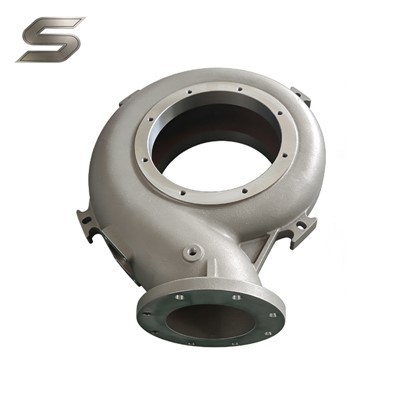
First, let’s keep it simple. Centrifugal casting works by spinning molten metal inside a mold at super high speeds. The centrifugal force pushes the metal outward, so it fills every nook of the mold wall evenly, and impurities like slag or air bubbles get pulled toward the center (which we just machine off later). But the machines that do this spinning? They’re not one-size-fits-all. Let’s break down the main types I work with day to day, no jargon promise.
First up: Horizontal Centrifugal Casting Machines. This is the workhorse for us, and probably the most common type you’ll see for long, hollow parts. Think pipes, tube liners, engine cylinder sleeves, or even large bearing bushes. The mold here lays flat, spinning around a horizontal axis—like rolling a log back and forth, if that log was spinning thousands of times a minute. The speed is key here; for metal like steel, we’re talking 300 to 1,500 RPM, and for lighter metals like aluminum, a bit lower, around 200 to 1,000 RPM.
Wait, why horizontal? Because the centrifugal force is evenly distributed around the inner wall of the mold when it’s flat. If you tried to make a long pipe with a vertical machine, the metal would slump downward as it cools, leading to uneven walls. That’s a big no-no for parts that have to hold pressure, like oil pipelines or hydraulic cylinders. The other bonus with horizontal machines? We can make parts way longer than other setups—some of ours are up to 12 feet long, no problem. And because there’s no core (wait, right, centrifugal casting usually doesn’t need a solid inner core for hollow parts, which cuts down on material and cost), the inner surface is super smooth if we get the mold right. I’ve had customers come to us after struggling with cast pipes that had thin spots; switching to horizontal centrifugal fixed that issue almost immediately.
Next, Vertical Centrifugal Casting Machines. These are the opposite—mold stands straight up, spinning around a vertical axis. What are these good for? Parts that are short, wide, and have a thick circular cross-section. Like gear blanks, brake rotors, flywheels, or valve bodies. If you’ve ever spun a top between your fingers, that’s basically how this machine works, just on a way bigger scale. The speed here is even higher than horizontal sometimes—up to 3,000 RPM, because you need more force to push the heavy molten metal outward when the mold is standing up.
Here’s a thing to note: vertical machines can’t make parts very long, usually only up to 3 or 4 feet max. But they shine for parts that need uniform density all the way through. The centrifugal force here pushes the metal equally in all directions, so there’s no chance of the inner wall slumping—since it’s vertical, gravity actually aligns with the force a bit, helping the metal settle. We use these a lot for automotive brake rotors, too, because the even density means they don’t warp when they get hot, which is a huge deal for safety. I had a customer in the auto industry last year who was rejecting 15% of their cast rotors for warping; switching to vertical centrifugal cut that reject rate to under 2%. That’s the kind of win that makes me love this job.
Wait, there’s a third type I can’t skip: Centrifugal Casting Machines with Molds That Move, sometimes called Vertical Horizontal or Semi-Centrifugal Casting? No, wait, better to call them Machine-Type: Tilting Centrifugal Casting Machines. Yeah, that’s right. These setups let you tilt the mold as it spins, which is perfect for parts that are a mix of thick and thin, or have irregular shapes that need more control over how the metal flows. A common use for tilting machines is making metal parts like bushings that have a softer inner lining—like a steel outer shell with a bronze inner layer. You pour the first metal (steel) into the mold, tilt it to spread it evenly, spin it, then pour the second metal (bronze) later. The tilting motion prevents the two metals from mixing too much, so you get that strong steel outer and wear-resistant inner without defects.
Another use for tilting machines? Making parts where the center of the part needs to have a different composition than the outer, or even adding inserts. Wait, inserts are a big one—sometimes customers need a metal part with a ceramic insert, or a steel insert for extra strength. The tilting motion lets you position the insert just right before spinning, so the molten metal wraps around it evenly, no gaps. I’ve worked with a construction equipment maker who needed large gear hubs with steel inserts; their old process had the inserts shifting 20% of the time, but tilting centrifugal fixed that. It’s not as fast as horizontal or vertical machines, though, so we usually reserve it for parts that can’t be made on the other two.
Wait, hold on—there’s also Die-Centrifugal vs. Sand-Centrifugal? No, that’s the mold material, not the machine type, right? Let me clarify that, because I get that question all the time. A lot of people mix up machine types with mold types. The machine is the whole spinning setup; the mold is what holds the metal. For example, horizontal machines can use metal dies (for repeat parts like cylinder sleeves) or sand molds (for custom parts). Sand molds are cheaper for low-volume runs, while metal dies last longer for high production. That’s a side note, but important to get right so you don’t confuse the two.
Now, let’s talk about what matters most for you, the buyer. When a customer comes to me saying “I need a centrifugal casting for my part,” the first question I ask is: what’s the size, shape, and material you’re working with? If it’s a 10-foot steel pipe, horizontal machine is the only way. If it’s a 2-foot brake rotor, vertical is perfect. If it’s a gear hub with an insert, tilting is your guy. Choosing the wrong machine leads to defects, higher costs, and delays—no one wants that. I’ve seen a customer try to use a vertical machine for a 8-foot pipe; the inner wall was 20% thinner on one side, and they had to scrap the whole batch. That’s a mistake we avoid by matching the machine to the part.
Also, modern machines have come a long way. We have horizontal machines with automated mold loading and unloading, so we can run 24/7 for high-volume orders. Vertical machines with variable speed controls, so we can adjust the RPM for different metals—aluminum needs less force than stainless steel, for example. The old machines were all manual, but now automation cuts down on human error, which means more consistent parts. That’s why I invested in a new tilting machine last year; it lets us do custom small batches faster, which is great for startups or companies testing a new part.
Wait, are there any other machine types? Let me think. Oh, centrifugal casting for investment castings? No, that’s a different process. Or centrifugal casting for large parts like turbine housings? Those usually use horizontal machines, since they’re long and wide. The three I listed—horizontal, vertical, tilting—are the main ones for industrial use, which is 99% of what we supply.

At the end of the day, as a centrifugal casting supplier, my job isn’t just to send you a quote. It’s to help you pick the right machine for your part, so you get a high-quality part that meets your specs, on time, and on budget. If you’re working on a project right now, whether it’s a small batch of brake rotors or a large run of industrial pipes, don’t guess which machine to use. Reach out, and we can walk through your part, talk through the options, and make sure you get exactly what you need. No jargon, no hidden fees, just straight talk about centrifugal casting machines and parts that work.
Stainless Steel Centrifugal Castings References:
- Campbell, J. (2004). Casting Processes for Engineering Components. Butterworth-Heinemann.
- Kurt, A., & Ozsari, H. (2018). Centrifugal Casting: Principles and Applications. Journal of Materials Processing Technology.
- ASTM International. (2020). Standard Guide for Centrifugal Casting of Metals. ASTM E120-20.
Hebei Shata Machinery Co., Ltd.
As one of the most experienced centrifugal casting manufacturers and suppliers in China, we have advanced foundry technique and professional production team. Welcome to buy high-grade centrifugal casting for sale here from our factory. All custom made products are with high quality and competitive price.
Address: No.11 Cangshun Rd., Shijiazhuang, Hebei, China
E-mail: Info@shatamachinery.com
WebSite: https://www.shatamachinery.com/
